
RIGHT FACE ARROW FACE TRAVERSE
INFORMATION
Length: 4km
Elevation gain: 745m
Required time: 3-4 Hours
Route type: Point to point
Difficulty level: Advanced
Price: $80
Right Face Arrow Face Traverse is one of those awe-inspiring routes on Table Mountain. With its steep ascent and exposure on the traverse line, this route is not for the faint hearted. If you have a good level of fitness and are not afraid of heights, then this classic line which traverses beneath the face of Table Mountain is definitely worth doing.
THE ROUTE
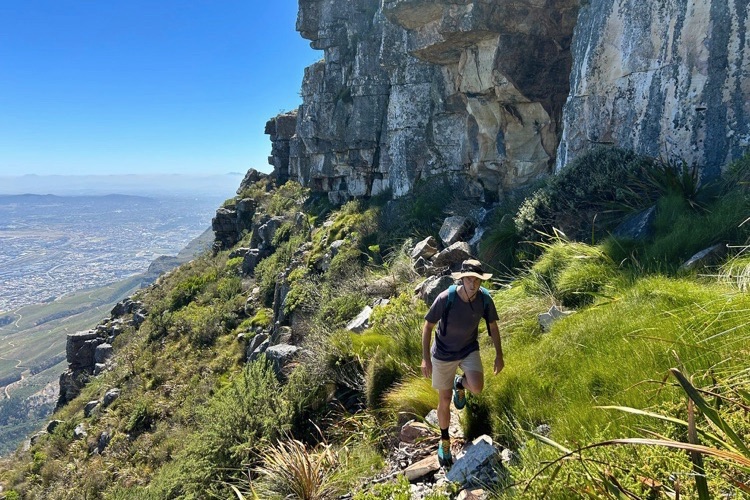
It starts at the Platteklip Gorge Trailhead. Once on the contour path you head toward Yellowstone Gully. This gully is not signposted, and so hiking a guide is highly recommended.
From the start of Yellowstone Gully all the way to the traverse line, the trail is steep, with some B grade scrambling in some sections.
As one nears the top of Yellowstone Gully the route becomes a little overgrown and vegetative. Shortly after this section you’ll reach the start of the traverse. The proverbial jewel in the crown.
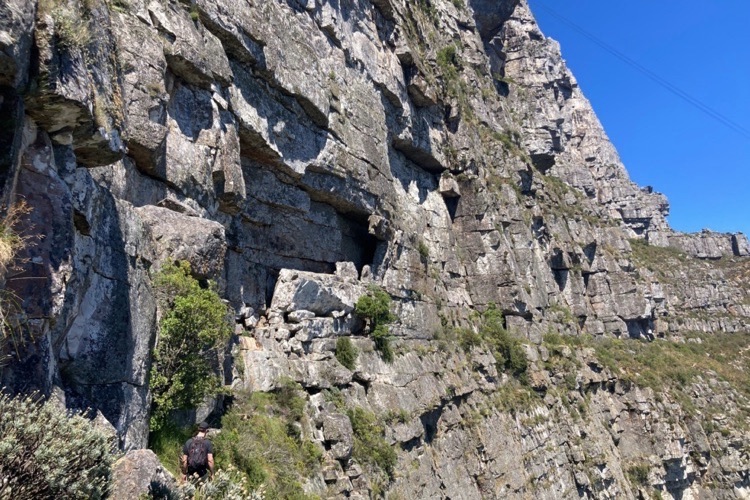
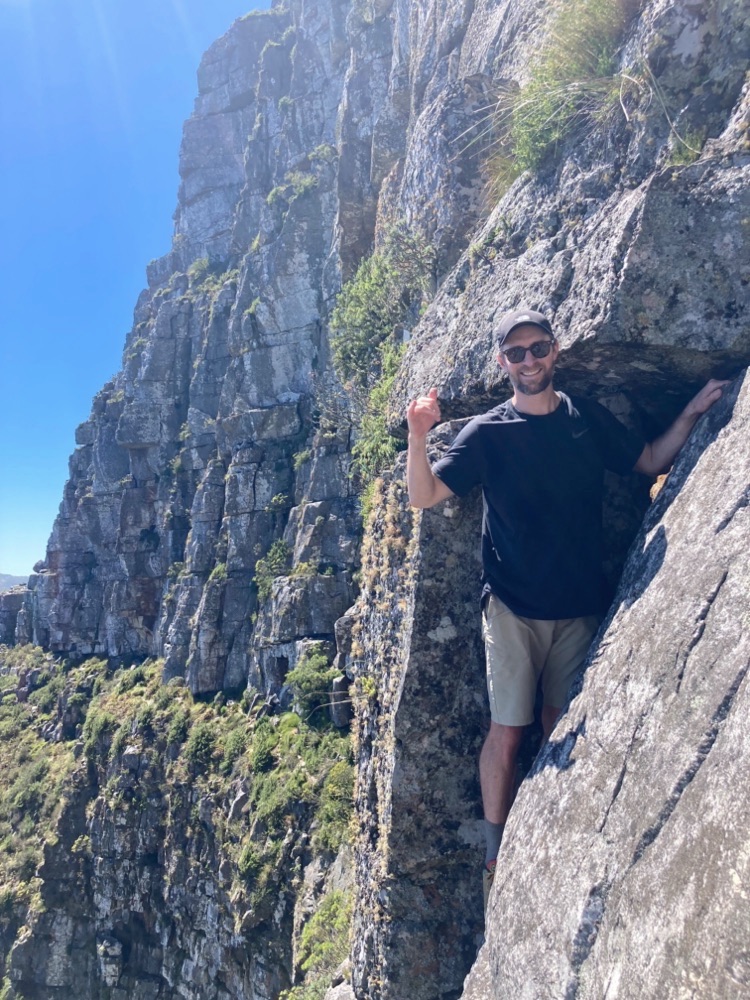
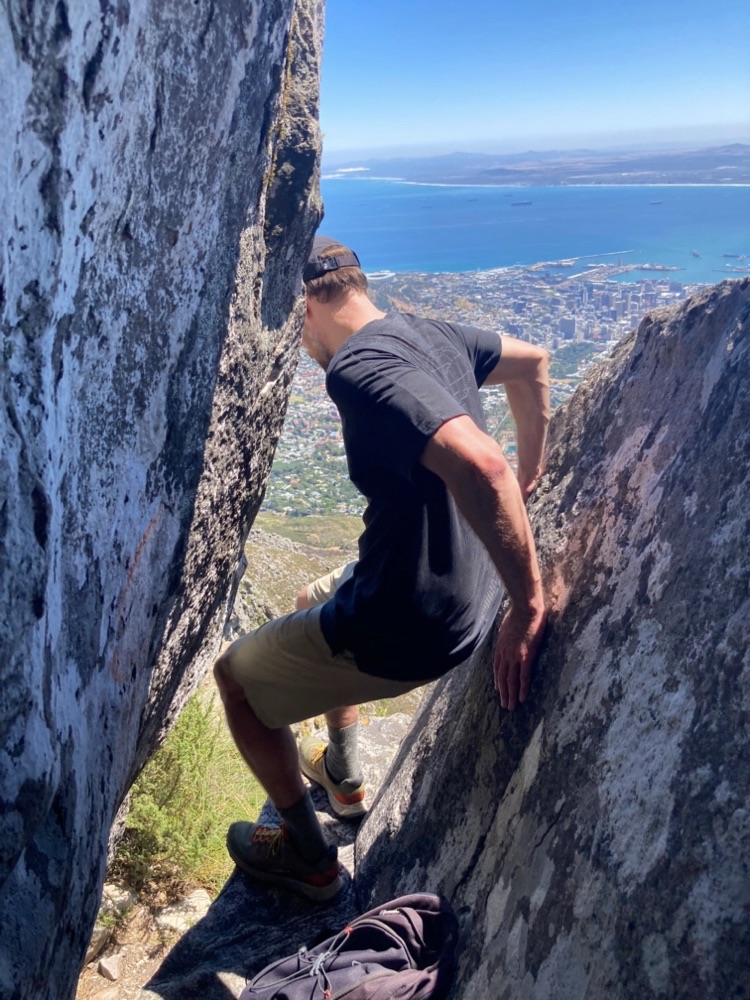
The exposure quickly becomes apparent on the traverse, with majestic views on offers of Table Bay below. After navigating one C grade scramble move up and across, you then make your way behind the rock face into some awesome caverns and small cave sections.
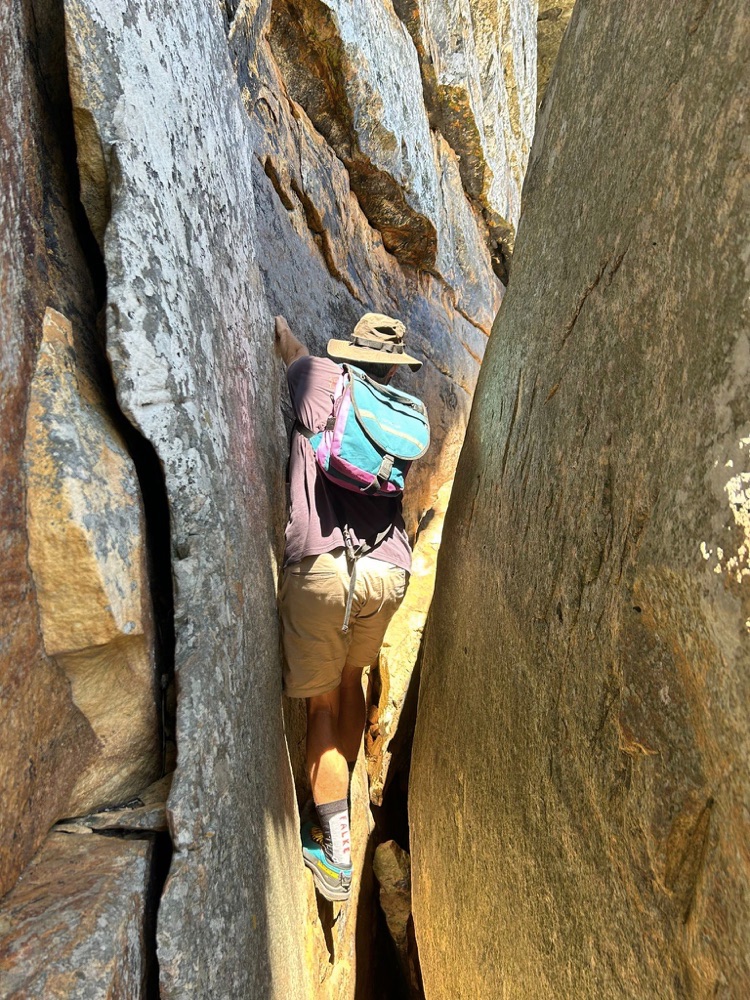
In some places one has to move awkwardly through some narrow sections in the rock, sometimes back onto the exposed ledge. However, most of the traverse is behind the rock face. The entire traverse is only a few hundred metres long.
The hike ends by linking up with India Venster where it goes up and around to Fountain Ledge. Our guided hikes finish by the cable station where we usually take the cable car back down. However, if the weather prevents the cable car from running, we then walk down Platteklip Gorge.
FAUNA AND FLORA
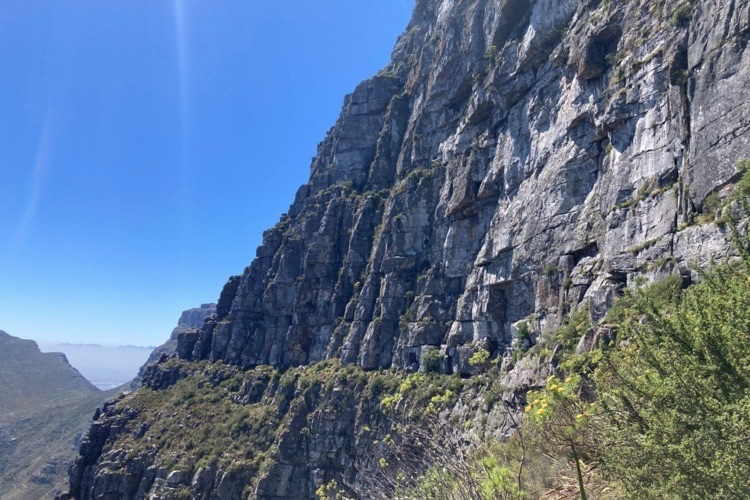
Beyond the gnarly exposure, the Right Face Arrow Face hike provides an opportunity to immerse oneself in the unique flora and fauna of Table Mountain. Table Mountain forms part of the Cape Floral Kingdom, the smallest of the six floral kingdoms around the world.
Hikers may encounter a variety of plant species, including proteas, ericas, and restios, showcasing the biodiversity of this UNESCO-protected site.
Birdwatchers will be able to see both Cape sugarbirds and orange-breasted sunbirds flitting amidst the fynbos. Moreover, as you ascend, you may even be lucky enough to spot a black eagle.
If you’re lucky you may even spot the exotic Himalayan tahr. In the 1930’s these mountain goats escaped from the Groote Schuur Zoo which was then located on the slopes of Table Mountain.